



Trk Receptor
Tropomyosin related kinase receptor
Trk receptors are a family of three receptor tyrosine kinases (TrkA, TrkB, and TrkC), each of which can be activated by one or more of four neurotrophins-nerve growth factor (NGF), brain-derived neurotrophic factor (BDNF), and neurotrophins 3 and 4 (NT3 and NT4).
TrkA, TrkB, and TrkC are transmembrane proteins that comprise the TRK receptor family. These receptor tyrosine kinases are expressed in human neuronal tissue, and play an essential role in both the physiology of development and function of the nervous system through activation by neurotrophins (NTs). The latter are specific ligands known as NGF for TrkA, BDGF, and NT-4/5 for TrkB and NT3 for TrkC, respectively.
The binding of the ligand to the receptor triggers the oligomerisation of the receptors and phosphorylation of specific tyrosine residues in the intracytoplasmic kinase domain. This event results into the activation of signal transduction pathways leading to proliferation, differentiation and survival in normal and neoplastic neuronal cells.
Trk Receptor Isoform Specific Products
All Product Categories
-
Trk Receptor Inhibitors
(147)
View all products
-
Trk Receptor Agonists
(13)
View all products
-
Trk Receptor Antagonists
(4)
View all products
-
Trk Receptor Activators
(24)
View all products
-
Trk Receptor Modulators
(4)
View all products
-
Trk Receptor Degraders
(5)
View all products
-
Trk Receptor Controls
(4)
View all products
-
Trk Receptor Ligands
(2)
View all products
-
Trk Receptor Related Products (219)
Related Products (219)

-
Antibodies (9)
-
Trk Receptor Isoform Comparison
-
Trk-IN-9
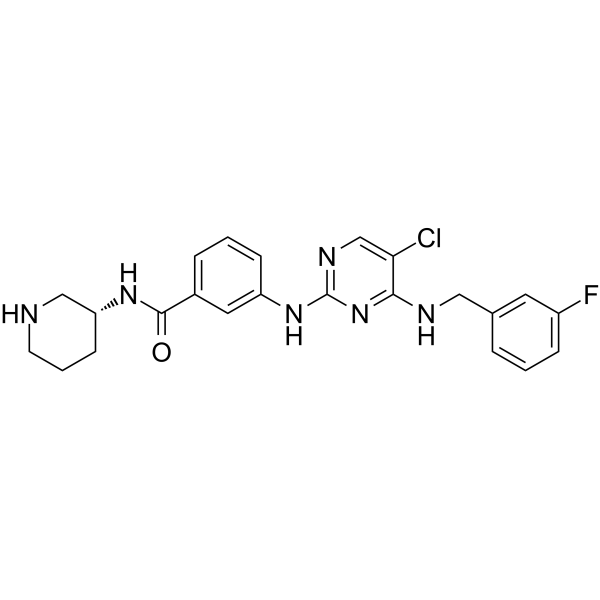 0 ImagesTrk-IN-9 (Compound 12) is a potent inhibitor of TRK. Trk-IN-9 inhibits the proliferation of Km-12 cell lines. Trk-IN-9 induces the apoptosis of Km-12 cells in a concentration-dependent manner. Trk-IN-9 inhibits the phosphorylation of TRK to block downstream pathways. Trk-IN-9 has the potential for the research of NTRK-fusion cancers.
-
Luvagrobart
 0 ImagesSynonyms: AK-115
-
CZS-241
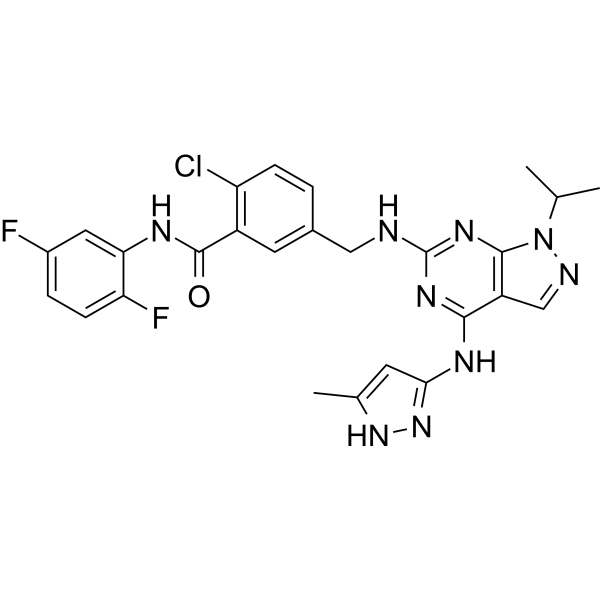 0 ImagesCat. No.: HY-149912CAS No.: 3016297-55-2CZS-241 is an orally active and selective inhibitor of Polo-like Kinase (PLK) 4 (IC50=2.6 nM). CZS-241 inhibits TRKA with an IC50 value of 2.74 μM. CZS-241 induces apoptosis and arrests cell cycle at S/G2 phase. CZS-241 shows highly potent antiproliferative activity against leukemia cell lines, and exhibits safety against normal cell lines.
-
NG-012
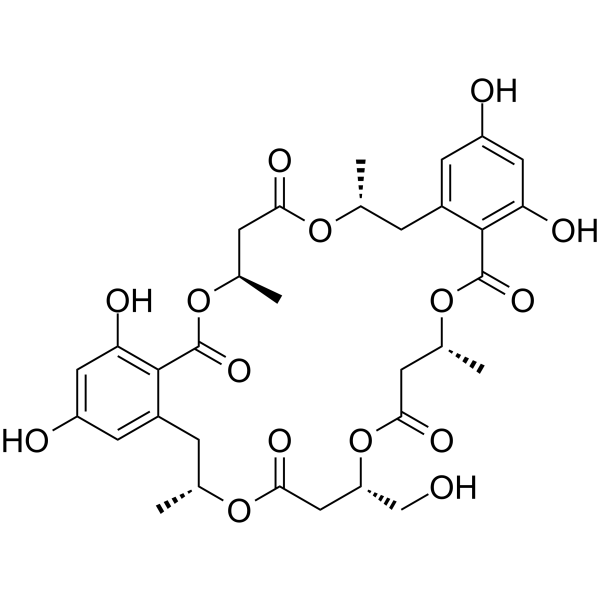 0 ImagesCat. No.: HY-117517CAS No.: 141731-76-2NG-012, potentiator of nerve growth factor (NGF), were isolated from the culture broth of Penicillium verruculosum F-4542. NG-012 potentiates the neurite outgrowth induced by NGF in rat pheochromocytoma cell line (PC12).
-
BNN27
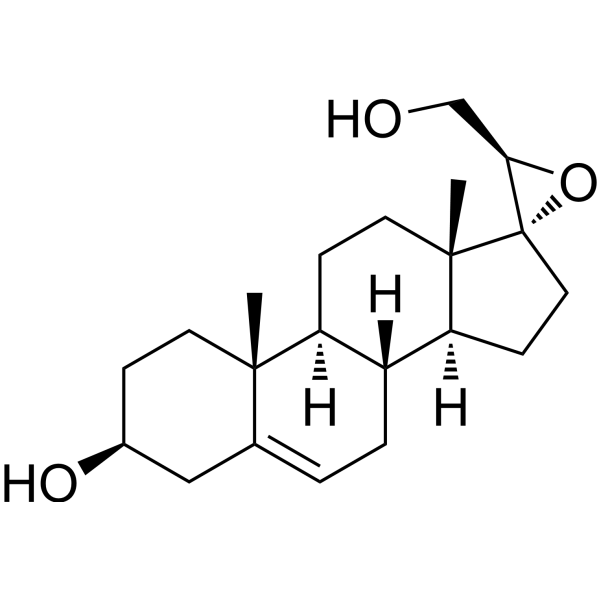 0 ImagesCat. No.: HY-170409CAS No.: 1195795-81-3BNN27 is the agonist for TrkA receptor and p75NTR receptor, that exhibits neurotrophic and anti-apoptotic effects. BNN27 increases the levels of glutamate, GABA, and glutamine in the rat hippocampus and prefrontal cortex, improves glutamate turnover. BNN27 exhibits neuroprotective efficacy in mouse amyotrophic lateral sclerosis (ALS) model, exhibits anti-inflammatory efficacy in experimental autoimmune encephalomyelitis (EAE) model, exhibits retinal protective efficacy in rat diabete models. BNN27 is blood-brain barrier penetrable.
-
CZS-241 hydrochloride
 0 ImagesCat. No.: HY-149912APurity: 98.76%CZS-241 hydrochloride is an orally active and selective inhibitor of Polo-like Kinase 4 (PLK4) (IC50=2.6 nM). CZS-241 hydrochloride inhibits TRKA with an IC50 value of 2.74 μM. CZS-241 hydrochloride induces apoptosis and arrests cell cycle at S/G2 phase. CZS-241 hydrochloride shows highly potent antiproliferative activity against leukemia cell lines, and exhibits safety against normal cell lines.
-
AZD 2066 hydrate
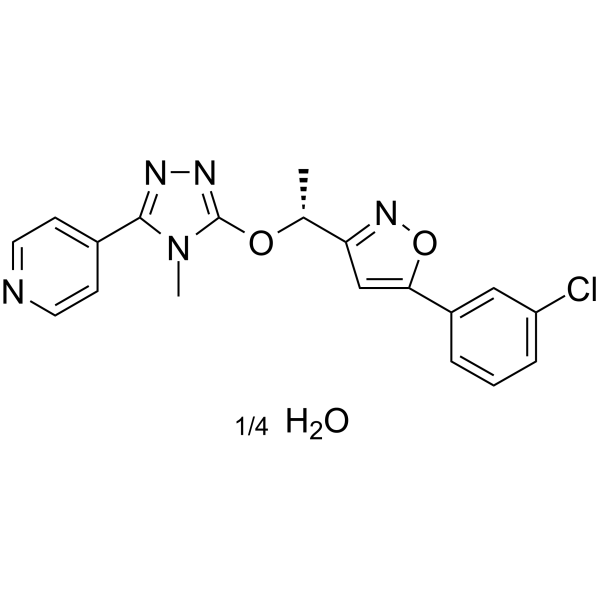 0 ImagesCat. No.: HY-110255AAZD-2066 hydrate is a selective, orally active and blood-brain barrier-permeating mGluR5 antagonist. AZD 2066 hydrate activates the BDNF/trkB signaling pathway. AZD 2066 hydrate can be used in the research of neuropathic pain, major depressive disorder and gastroesophageal reflux disease.

-
Entrectinib-d4
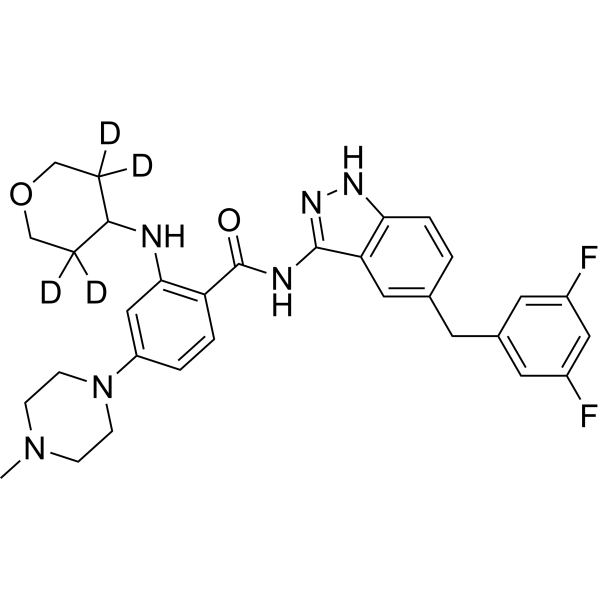 0 ImagesCat. No.: HY-12678SSynonyms: NMS-E628-d4; RXDX-101-d4Entrectinib-d4 (NMS-E628-d4; RXDX-101-d4) is the deuterium labeled Entrectinib (HY-12678). Entrectinib is an orally active, BBB-penetrated and centrally active inhibitor of TrkA/B/C, ROS1 and ALK, with IC50 values of 1, 3, 5, 12 and 7 nM, respectively. Entrectinib induces apoptosis and cycle arrest in cancer cells, has antitumor activity, and attenuates bleomycin-induced lung fibrosis in mice.
-
1D228
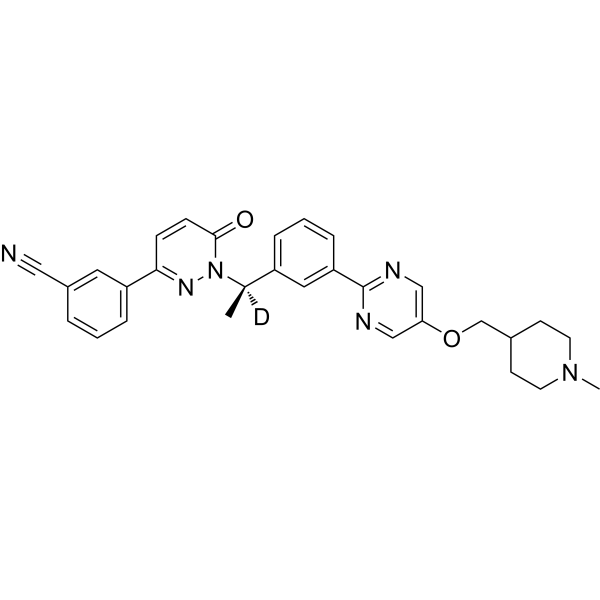 0 ImagesCat. No.: HY-157148CAS No.: 2925447-16-91D228 is a c-Met/TRK inhibitor with antitumor activity. 1D228 inhibits cyclin D1 to induce G0/G1 arrest and inhibit cancer cell proliferation and migration. 1D228 can be used in the study of gastric, liver and vascular tumors.
-
Anti-MUSK Antibody
 0 ImagesCat. No.: HY-P990473Purity: 99.81%Anti-MUSK Antibody is a humanized antibody expressed in CHO that targets MUSK. The Anti-MUSK Antibody contains huIgG1 heavy chain and huκ light chain, with a predicted molecular weight (MW) of 143.86 kDa. For the isotype control of Anti-MUSK Antibody, please refer to Human IgG1 (L234A/L235A) kappa, Isotype Control (HY-P991207).
-
Entrectinib (Standard)
 0 ImagesSynonyms: NMS-E628 (Standard); RXDX-101 (Standard)Entrectinib (Standard) is the analytical standard of Entrectinib. This product is intended for research and analytical applications. Entrectinib (NMS-E628) is an orally active, BBB-penetrated and centrally active inhibitor of TrkA/B/C, ROS1 and ALK, with IC50 values of 1, 3, 5, 12 and 7 nM, respectively. Entrectinib induces apoptosis and cycle arrest in cancer cells, has antitumor activity, and attenuates bleomycin-induced lung fibrosis in mice.
-
Anti-NGF/bNGF Antibody
 0 ImagesCat. No.: HY-P990474Purity: 99.65%Synonyms: AS2886401-00Anti-NGF/bNGF Antibody is a CHO-expressed humanized antibody that targets NGF/bNGF. Anti-NGF/bNGF Antibody has a huIgG2 heavy chain and a huκ light chain, with a predicted molecular weight (MW) of 144.14 kDa. The isotype control for Anti-NGF/bNGF Antibody can be referenced as Human IgG2 kappa, Isotype Control (HY-P99002).
-
Sitravatinib malate
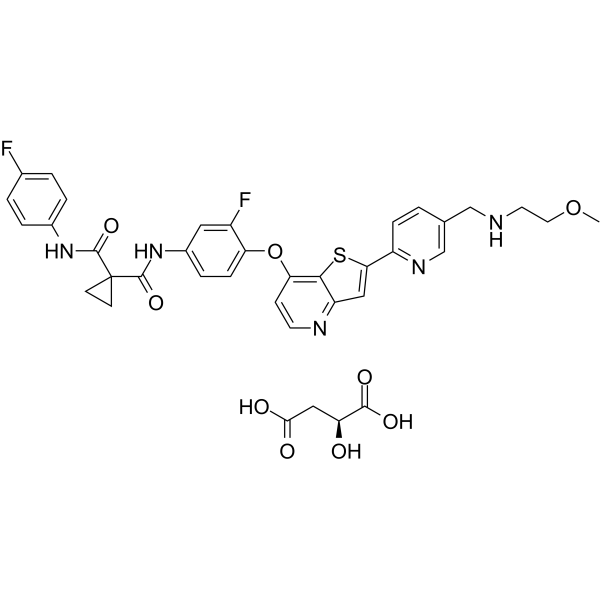 0 ImagesCat. No.: HY-16961ACAS No.: 2244864-88-6Synonyms: MGCD516 malate; MG-516 malateSitravatinib malate (MGCD516 malate) is an orally bioavailable receptor tyrosine kinase (RTK) inhibitor with IC50s of 1.5 nM, 2 nM, 2 nM, 5 nM, 6 nM, 6 nM, 8 nM, 0.5 nM, 29 nM, 5 nM, and 9 nM for Axl, MER, VEGFR3, VEGFR2, VEGFR1, KIT, FLT3, DDR2, DDR1, TRKA, TRKB, respectively. Sitravatinib malate shows potent single-agent antitumor efficacy and enhances the activity of PD-1 blockade through promoting an antitumor immune microenvironment.
-
LPM4870108
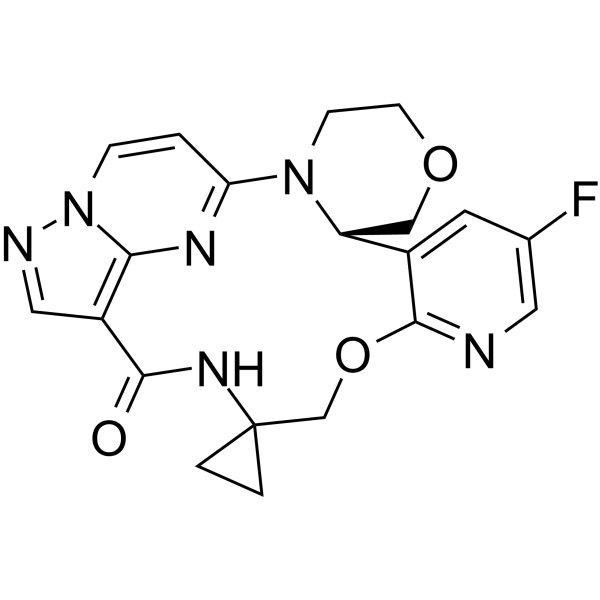 0 ImagesCat. No.: HY-132229CAS No.: 2803679-07-2
-
FLT3/TrKA-IN-1
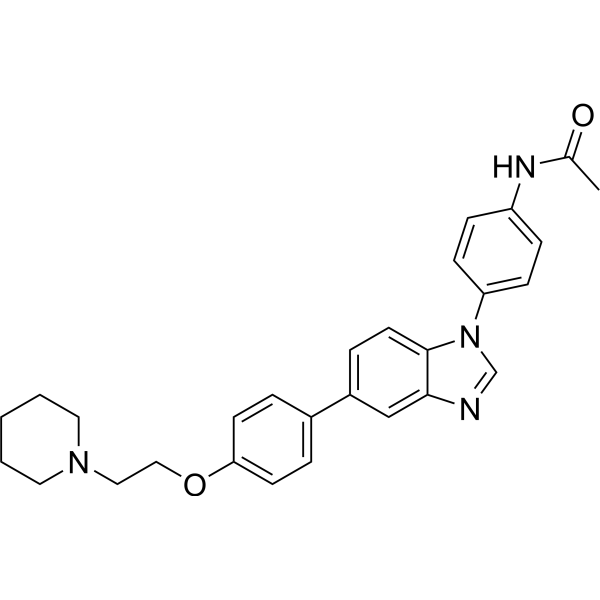 0 ImagesCat. No.: HY-146749FLT3/TrKA-IN-1 is a potent FLT3/TrKA dual kinase inhibitor with the IC50s of 43.8 nM, 97.2 nM, 92.5 nM and 23.6 nM for FLT3, FLT3-ITD, FLT3-TKD and TrKA, respectively. FLT3/TrKA-IN-1 induces cell cycle arrest at the G0/G1 phase as well as apoptosis and shows antiproliferative activity in vitro. FLT3/TrKA-IN-1 has the potential for the research of Acute myeloid leukemia (AML).
-
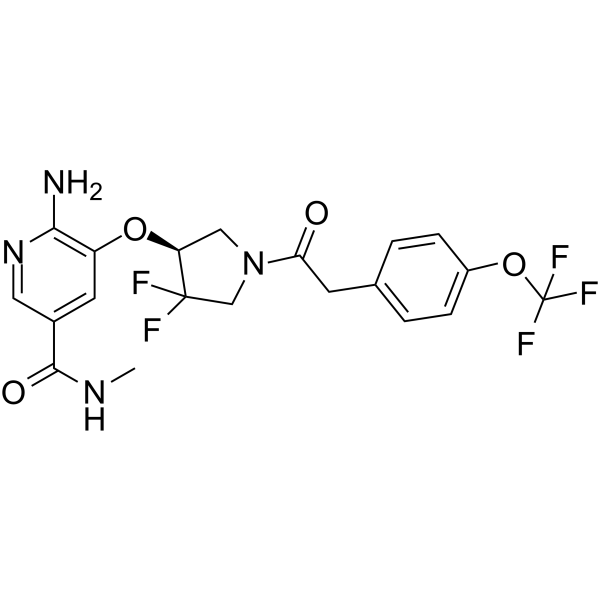
Fudotinib
 0 ImagesCat. No.: HY-176942CAS No.: 2644645-39-4Synonyms: JYP0322Fudotinib (JYP0322) (ROS1-IN-3) is a potent orally active, selective, and CNS-penetrant ROS1 inhibitor. Fudotinib selectively inhibits human wild-type ROS1 and human ROS1G2032R with IC50s of 0.37 and 0.3 nM, respectively, showing 6-130-fold selectivity over TRKA, TRKB, and TRKC. Fudotinib inhibits proliferation of ROS1 fusion-expressing cells, and inhibits tumor growth in mouse xenograft models. Fudotinib can be used for the research of non-small cell lung cancer (NSCLC).
-
Sacibertinib
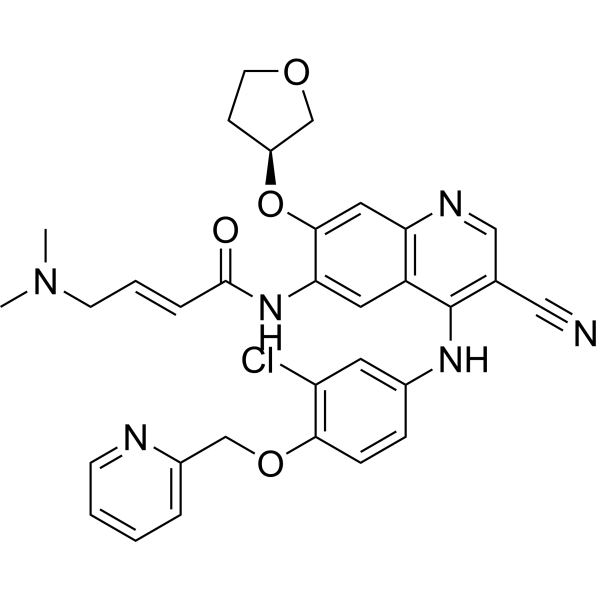 0 ImagesCat. No.: HY-147303CAS No.: 1351941-69-9Sacibertinib is a tyrosine kinase (Trk) inhibitor with EC50 value of 110 nM and 244 nM for EGFR-TK phosphorylation and HER2, respectively. Antineoplastic activity.
-
TRK-IN-17
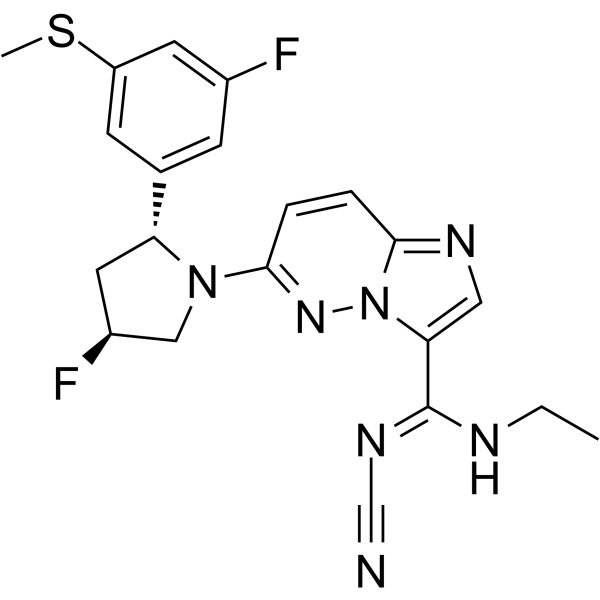 0 ImagesCat. No.: HY-146523CAS No.: 2409544-80-3TRK-IN-17 is a potent inhibitor of TRK. Tropomyosin-related kinases (Trks) are a family of receptor tyrosine kinases activated by neurotrophins, a group of soluble growth factors including Nerve Growth Factor (NGF), Brain-Derived Neurotrophic Factor (BDNF) and Neurotrophin-3 (NT-3) and Neurotrophin-4/5 (NT-4/5). TRK-IN-17 has the potential for the research of cancer diseases (extracted from patent WO2021148807A1, compound 3).




